Last Updated: November 23, 2026
Quick Summary
Book a Toronto airport transfer with child seats by stating the seat type and your child’s age, weight and height when you request the quote, then confirming the seat is pre-installed and safety-checked before pickup. Book as early as your plans allow, ideally when you book your flight.
- Ontario’s child restraint rules require appropriate seating by age, height and weight, so confirm current thresholds with the province.
- Rideshare apps rarely guarantee an infant or toddler seat, and a standard airport taxi may not carry the seat type you need.
- Ask what happens if your flight is delayed and whether waiting time carries an additional fee.
- Get the total in writing, including HST and any child-seat charge, so the fare matches the quote.
- A forward-facing seat must have its top tether connected, and the harness must sit at or below shoulder level.
Table of Contents
- Why Child Seats Matter on Airport Transfers
- Child Seat Types and Suitability for Airport Transfers
- How to Book a Car Service with a Child Seat
- Airport Transfer with Infant Car Seat: What to Expect
- Airport Transfer with Toddler Car Seat: Setup and Safety
- Airport Transfer with Booster Seat: When Is Your Child Ready?
- Book Your Child-Safe Airport Transfer
- Frequently Asked Questions
Why Child Seats Matter on Airport Transfers
A Toronto airport transfer with child seats starts with one decision made before you book: you are not just buying a ride, you are buying a properly fitted restraint for a child who cannot advocate for themselves. Ontario’s child restraint rules require appropriate seating by age, height and weight, and a private transfer lets you confirm the seat type in advance rather than hope one appears at the curb.
The gap most families hit is simple. Rideshare apps rarely guarantee an infant or toddler seat, and a standard airport taxi may not carry the seat type you need. Neither is a safe assumption with a small child at 5 a.m. Below, we break down seat types, booking steps, and what to check before the door closes.
What the law actually requires, and where taxis fit
Ontario’s Highway Traffic Act and its child restraint regulation set out the legal minimum. In general terms, a child must be secured in an appropriate child restraint system until they meet the height and weight thresholds that allow a seat belt alone. The province publishes the current thresholds and seat-stage guidance on Ontario child car seat and booster seat requirements, and those numbers, not a booking agent’s memory, are the final word. Thresholds have changed over time, so confirm them against the current page before you rely on any figure you read elsewhere.
Ontario’s rules also recognize that some for-hire vehicles may be treated differently from private cars when it comes to seating. That flexibility is a legal carve-out, not a safety recommendation. A taxi that is permitted to carry a child without a dedicated seat is not thereby a safe choice for a newborn on a highway run to Pearson. Treat the exemption as a floor, not a target.
Why a pre-booked private transfer changes the equation
A private transfer with a confirmed seat sidesteps the exemption entirely. You are not relying on a legal allowance; you are contracting for a specific seat type, installed and checked before pickup. That distinction matters most for rear-facing infants, who cannot use a booster and cannot safely ride on an adult lap. It also matters for families arriving on a long-haul flight at an hour when few vehicles are available and improvisation is most tempting.
Requesting “a car seat” without specifying stage can result in the wrong fit for the child. Specifying the stage, rear-facing infant, forward-facing harnessed, or belt-positioning booster, at the quote stage is the single most effective way to avoid that outcome. The sections below walk through each stage, the booking steps, and the checks to run before the door closes.
Child Seat Types and Suitability for Airport Transfers
Child seats fall into four groups, and the right one depends on your child’s age, weight and height, not on convenience. Getting the category wrong is a common mistake on family airport runs.
| Seat Type | Typical Suitability | Position | Airport Transfer Note |
|---|---|---|---|
| Rear-facing infant seat | Newborns and small infants | Rear-facing | Reserve earliest; limited stock |
| Convertible/forward-facing seat | Older toddlers and preschoolers | Forward-facing | Confirm harness routing on booking |
| Booster seat | School-age children | Belt-positioning | Check height, not just age |
| No seat required | Older children past booster stage | Standard belt | Verify against provincial rules |
A rear-facing seat protects an infant’s head and neck in a frontal impact. A forward-facing seat with a five-point harness suits a child who has outgrown the infant carrier. A booster simply positions the adult belt across the shoulder and hip. Always check the current Ontario rules on Ontario child car seat and booster seat requirements before you book, because thresholds change and the law, not the booking agent, is the final word.
How to Book a Car Service with a Child Seat
Booking a car service with a child seat takes four steps, and the seat request must be explicit. Never assume a “family-friendly” vehicle includes one.
- State the seat type and your child’s age, weight and height when you request the quote. Vague requests get vague results.
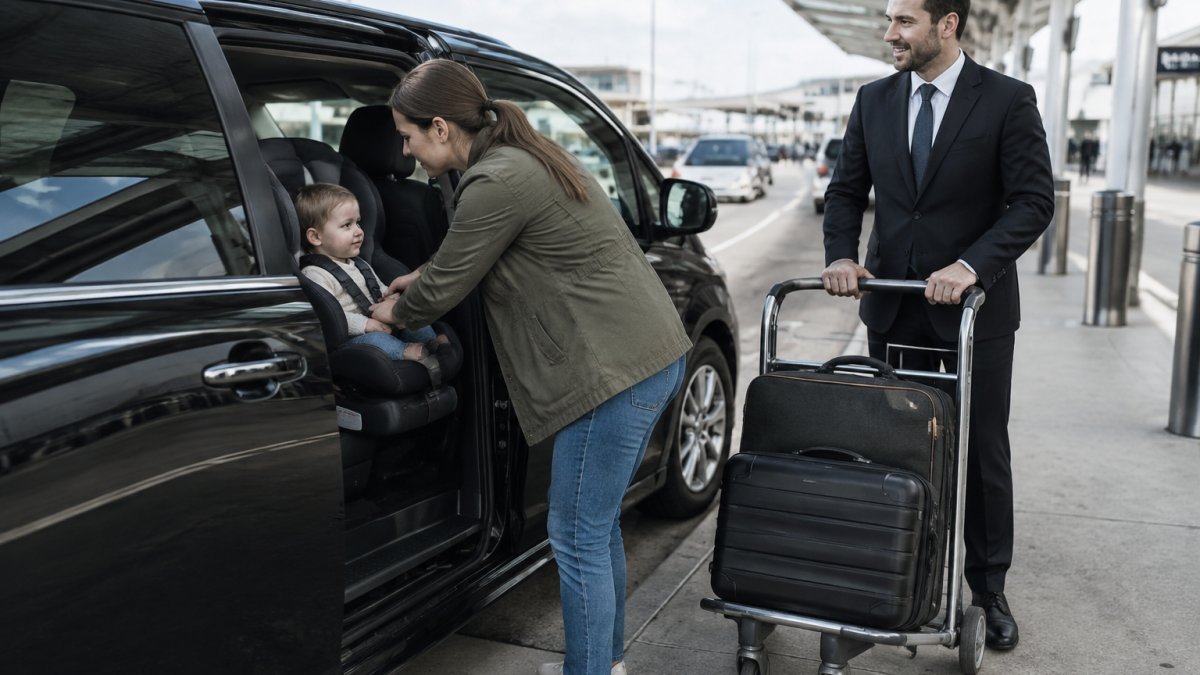
- Confirm the seat is pre-installed and safety-checked before pickup, not fitted at the curb.
- Ask what happens if your flight is delayed, and whether waiting time carries an additional fee.
- Get the total in writing, including HST and any child-seat charge, so the fare matches the quote.
The information to give at booking
A useful seat request reads like a short spec, not a sentence. Provide the child’s age, weight in kilograms or pounds, standing height, and the seat stage you believe is correct. Add the number of children and whether any need a rear-facing seat, because rear-facing seats take more vehicle space and limit how many can fit in one row. If you are traveling with a stroller or a travel crib, say so, it affects vehicle choice and luggage capacity. If a child has outgrown a harnessed seat by height but not weight, say that too; the operator can then confirm which seat type fits.
How far ahead to book
Book as early as your plans allow, ideally at the same time you book the flight. Forward-facing and booster seats are more widely stocked but still worth confirming at booking rather than at the curb. Ask the operator to read the seat details back to you.
Confirming the seat before you travel
Ask for written confirmation of the seat type, the vehicle class, and whether the seat will be installed before pickup. Ask for confirmation of all three. On the day before travel, re-confirm by phone or message, and note the name of the person who confirmed it. That record is useful if the vehicle arrives without the seat.
Installation verification and caregiver checks
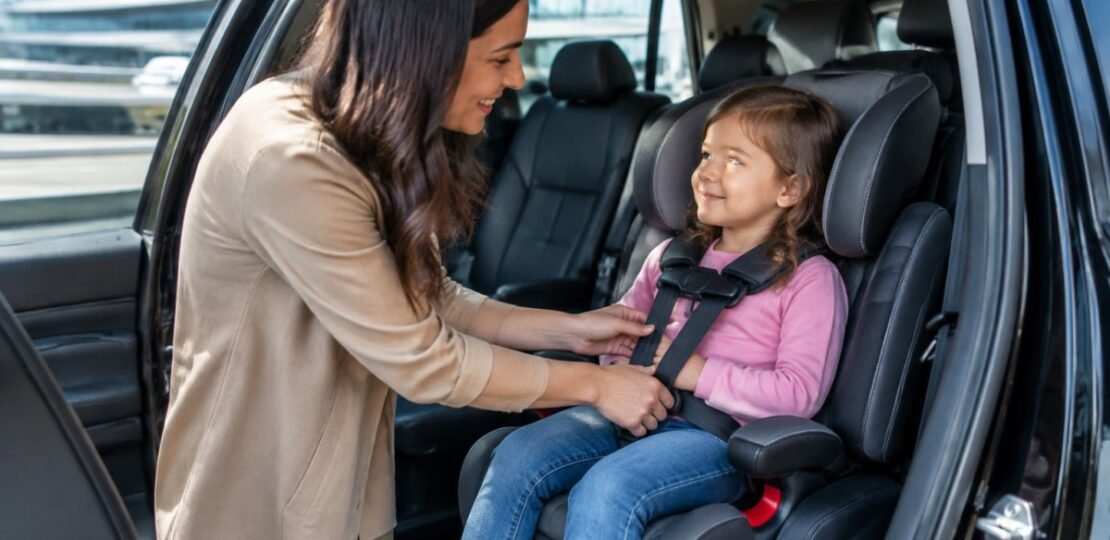
When the vehicle arrives, do not simply buckle the child in and go. Run a short check: the seat should not move more than a small amount at the belt path when you tug it; the harness should be snug enough that you cannot pinch slack at the collarbone; the chest clip should sit at armpit level; and a forward-facing seat should have its top tether connected. Ask the driver who installed the seat and whether it was checked.
Watch out: booking a seat by age alone can lead to the wrong fit. A tall four-year-old may have outgrown a harnessed seat, and a small six-year-old may still need a booster. If you want to see the full pickup process before you commit, our Pearson Airport Transportation: Complete Guide walks through arrival logistics. You can also book online once your seat details are confirmed, and review how hidden fees are handled so the quote you receive is the fare you pay.
Airport Transfer with Infant Car Seat: What to Expect
An infant transfer should look calm and scripted. Your chauffeur arrives and can help with luggage while you settle your child, provided the seat has been arranged in advance. The seat faces the rear, the harness sits snug against the chest, and the base is locked tight with no more than a small amount of movement at the belt path.
Expect a few practical details. Larger vehicles give you more room to load a stroller and bags. If you are arriving on a long-haul flight, build in buffer time and confirm flight-tracking arrangements when you book. For the broader arrival picture, our guide to Pearson pickup versus rideshare explains why a pre-booked transfer is easier with an infant in arms.
Airport Transfer with Toddler Car Seat: Setup and Safety
A toddler transfer hinges on the forward-facing seat and one non-negotiable: the top tether. A forward-facing seat must be tethered to the vehicle’s anchor point, and the harness must sit at or below shoulder level. Ask your operator to confirm both before pickup.
Here is what a proper fit looks like:
- The seat does not move more than a small amount at the belt path when you tug it
- The chest clip sits at armpit level
- The harness is snug enough that you cannot pinch slack at the collarbone
- The top tether is connected and tight
A common mistake is skipping the tether because the seat “feels secure.” It is not. The tether is what stops the seat pitching forward in a crash. For a toddler who has just learned to unbuckle, a professional driver also keeps an eye on the door locks and child-safety lock settings.
Airport Transfer with Booster Seat: When Is Your Child Ready?
A booster seat is the right call once your child has outgrown a harnessed seat by height or weight, not by birthday. The booster’s only job is to lift the child so the adult belt crosses the middle of the shoulder and the hip, never the neck or stomach.
Two tests decide readiness. First, does the child sit still for the whole trip without slouching or slipping the belt under an arm? Second, does the lap belt sit low across the upper thighs? If either answer is no, a harnessed seat is still the safer choice. Boosters are the seat type most often requested for school-age children on airport runs, and they are also the easiest to get wrong, because a tired child slumps and the belt rides up. Verify the current height and weight thresholds with the province before you rely on a booster alone.
Book Your Child-Safe Airport Transfer
The safest family airport transfer is the one you arranged in advance, with the seat type confirmed, installed and checked before you leave home. Skylink Limousine provides 24/7 support, professional chauffeurs in formal attire, and a fleet that ranges from sedans to large coaches. For current pricing and a quote, please visit our website.
If punctuality is your worry, our guide on guaranteeing driver punctuality for airport transfers explains how we plan around early departures and unpredictable road conditions.
Your child’s safety on the way to the airport is not the place to gamble on an app that might send the right seat. Tell us the seat type, your child’s height and weight, and your flight details, and we will confirm the vehicle and the fitted seat before pickup. Get started with Skylink Limousine and travel to the terminal with the seat already checked and the fare already agreed.
Frequently Asked Questions
How do I book an airport transfer with a child seat?
Book through the service’s website or phone line and specify the child’s age, weight, and height plus the seat type you need (infant, toddler, or booster). Confirm the seat will be pre-installed and safety-checked before pickup. Ask for written confirmation of the seat reservation in your booking summary. Skylink Limousine’s 24/7 support line lets you confirm details before your flight.
Should I bring my own car seat for an airport transfer?
You can, Bringing your own guarantees a familiar fit, but you must install it yourself in an unfamiliar vehicle, often at a busy curb. If you do bring your own, confirm the vehicle has anchor points and enough space. Otherwise, reserve a seat in advance and verify the installation before departure.
What information should I provide when requesting child seats?
Give the child’s exact age, weight in kilograms, and height in centimetres, plus the seat type required. Note how many children are traveling and whether any have special needs. Share your flight number, terminal, pickup time, and destination so the driver can plan around delays. Mention if you need multiple seats or a larger vehicle such as a minivan. Accurate details prevent the wrong seat being fitted on the day.
When should I book an airport transfer with child seats?
Booking early gives you time to plan the seat type, pickup time and installation details with the provider.

RELATED POSTS
View all