
Last Updated: November 21, 2026
Quick Summary
A pre-booked airport pickup gives you a fixed quote, a named chauffeur and flight tracking, while a rideshare is requested on demand and priced by the app at the moment you tap. Choose airport pickup for certainty on tight schedules, groups or luggage; choose rideshare for flexible solo trips.
- Rideshare pickups at Pearson happen at designated zones in Terminal 1 and Terminal 3, not the general arrivals curb.
- Rideshare estimates are not quotes, since surge pricing can apply when demand outpaces supply.
- A pre-booked transfer is quoted at booking, so the fare is known before you land.
- With a rideshare, a flight delay usually means cancelling and re-requesting at whatever demand looks like then.
- Skylink Limousine’s fleet ranges from 2 to 55 passengers, with Wi-Fi, privacy dividers and entertainment systems.
Table of Contents
- Pearson Airport Pickup vs Rideshare: The Core Differences
- Pearson Airport Rideshare Pickup Location: Terminals 1 and 3
- Airport Pickup Cost Comparison: Rideshare, Taxi, and Private Transfer
- Airport Pickup After Flight Delay: What Happens to Your Ride
- Private Airport Transfer: When a Chauffeur Beats an App
- Side-by-Side: Rideshare, Taxi, and Pre-Booked Car Service
- Luggage, Families, and Group Travel at Pearson
- When Your Driver Cancels or the Pickup Zone Is Congested
- Frequently Asked Questions
Pearson Airport Pickup vs Rideshare: The Core Differences
The choice between a pre-booked Pearson airport pickup and a rideshare app comes down to one trade-off: certainty versus flexibility. A pre-booked car service arranges your vehicle and driver before you land. A rideshare is requested on demand, priced by the app at the moment you tap, and dependent on driver availability at the curb.
Business travelers with a morning meeting often want certainty. Families with several suitcases often want space. Solo travelers on a flexible schedule often prefer an app.
Pearson Airport supports rideshare pickups at designated zones, so travelers should check airport signage for the correct meeting point before requesting a ride.
Below, we break down exactly how each option works at Pearson, what drives the cost, and where each one wins.
Pearson Airport Rideshare Pickup Location: Terminals 1 and 3
Rideshare pickup at Pearson happens at designated zones, not at the general arrivals curb. Both Terminal 1 and Terminal 3 have assigned areas, and riders follow airport signage from baggage claim to the meeting point. The zones are separate from the taxi curb, so a traveler who walks outside and looks for the first car in line is usually in the wrong place.
A common source of frustration for travelers is not knowing where their driver is after exiting arrivals. The app shows a pin, the terminal shows signs, and the two do not always match in a traveler’s head after a long flight. The fix is procedural: walk first, request second, and confirm the vehicle before you open the door.
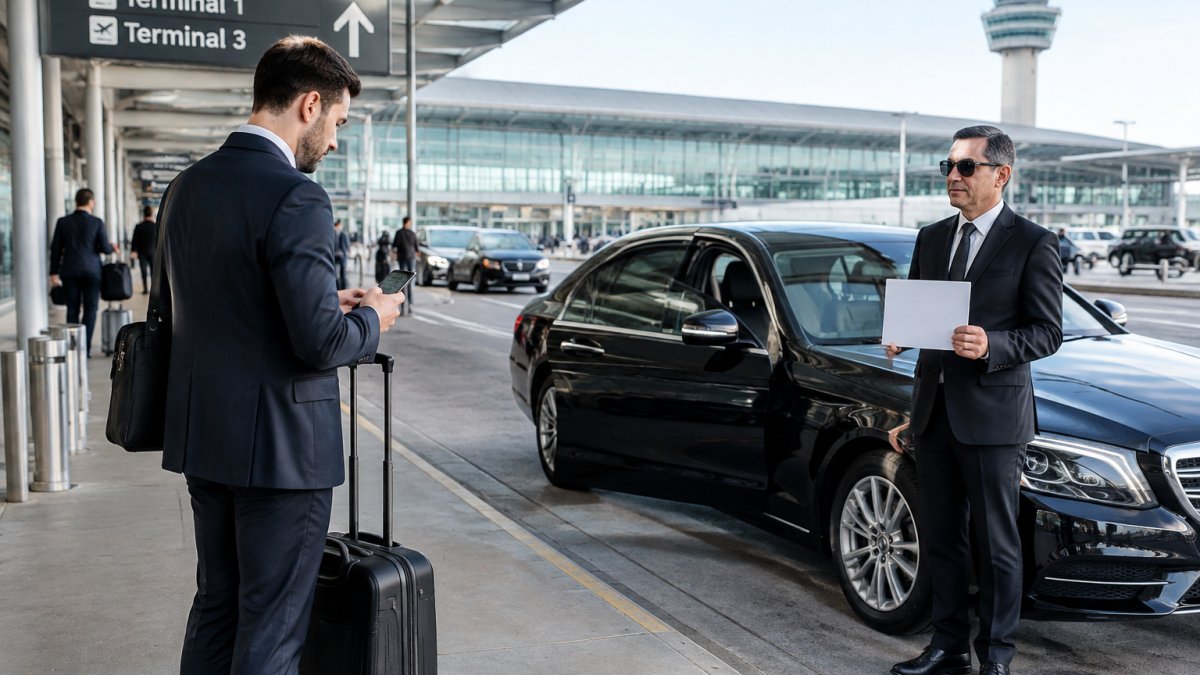
Terminal 1 Rideshare Pickup Instructions
At Terminal 1, follow the airport’s rideshare signage from the arrivals level to the designated pickup area. In practice, that means staying inside the terminal until you reach the signed exit for ride-hailing, then following the overhead and pillar signs to the assigned zone rather than stepping out at the first curb you see. Request your ride only once you are close to the zone, because drivers are not permitted to wait there. Confirm the vehicle’s plate and color in the app before you open the door.
Terminal 3 Rideshare Pickup Location and Instructions
Terminal 3 has its own assigned rideshare zone, and travelers should follow the airport signage to reach it.
What to Do If the Pickup Zone Changes or Is Congested
If the app pin and the physical signage disagree, follow the airport signage and message your driver with the zone name for clarity.
For the airport’s own terminal guidance, see Toronto Pearson’s ride-sharing guidance, which confirms that rideshare pickups operate at designated zones in both terminals.
Airport Pickup Cost Comparison: Rideshare, Taxi, and Private Transfer
Rideshare pricing is dynamic. Fares can move with demand, time of day, and driver availability, and surge pricing can apply when demand outpaces supply. Airport taxi fares are metered and may include airport fees and surcharges. A pre-booked private transfer is quoted in advance; for current pricing, request a quote from Skylink Limousine.
That third point is where the comparison gets interesting. A rideshare estimate is not a quote. An airport pickup cost comparison that ignores surge pricing is not a real comparison. The same trip can land at very different totals depending on when you request, how congested the curb is, and whether the app applies a multiplier at the moment you tap.
| Option | How Price Is Set | Surge or Variable Pricing | Fare Known Before You Land |
|---|---|---|---|
| Rideshare | App estimate at request time | Yes, demand-based | No |
| Airport taxi | Metered fare plus fees | Metered, traffic-dependent | No |
| Pre-booked transfer | Quoted at booking | No | Yes |
What Actually Drives the Total
Four cost components separate a realistic total from a headline fare. First, distance and route: a trip to downtown Toronto is a different distance and a different traffic profile than a trip to a nearby suburb, and the meter or app estimate reflects that. Second, airport fees and surcharges: taxi and rideshare trips leaving Pearson can carry airport-related charges that a curbside estimate may or may not display clearly. Third, tolls and road charges where the route uses them. Fourth, time and demand: a 5 a.m. weekday request and a Friday-evening request on the same route are not the same market.
How to Build Your Own Total-Cost Comparison
Because fares move, the honest method is to compare ranges rather than single numbers. Before you travel, price the same origin-and-destination pair three ways: an app estimate at the time you would realistically request, a taxi estimate from a fare estimator, and a fixed quote from a pre-booked provider. Add any airport fee, toll, and parking cost you would otherwise pay if you drove yourself. The option with the narrowest gap between its best and worst case is the most predictable, even if it is not the cheapest on paper.
For a fare estimate comparison across providers, tools like RideGuru’s fare estimator aggregate taxi and ride-hailing estimates, though estimates are not guarantees. For current transfer pricing, request a quote from us directly.
Watch out: comparing a pre-booked quote against a rideshare estimate taken at a quiet hour flatters the app. Compare like with like, at the time you will actually land.
Airport Pickup After Flight Delay: What Happens to Your Ride
A flight delay is where the two options diverge most sharply. With a rideshare, a delay usually means cancelling and re-requesting, and the new fare reflects whatever demand looks like when you finally land.
Toronto Pearson’s ride-sharing guidance confirms that rideshare pickups operate at designated zones, which is worth reviewing before you travel. For how tracking protects a booking in practice, see how flight tracking works.
Private Airport Transfer: When a Chauffeur Beats an App
A private airport transfer is a pre-arranged ride in a chauffeured vehicle, booked ahead with a fixed quote and a named driver. It can suit tight schedules, groups with luggage, and travelers who value a predictable total cost.
For a tight schedule, a pre-booked transfer can provide a planned pickup. Our chauffeurs wear formal attire, our support is available 24/7, and payment can be made online or in cash.
If you are weighing the cost against the certainty, decide whether private chauffeur service is worth it before you book.
Side-by-Side: Rideshare, Taxi, and Pre-Booked Car Service
Here is the comparison most guides skip. Each option has a genuine strength, and the right pick depends on your trip, not on which app has the best interface.
Rideshare
- Best for: solo travelers, flexible schedules, short trips
- Strength: request on demand, no booking ahead
- Weakness: surge pricing, driver availability, pickup zone confusion
- Best for: a spontaneous late-night pickup with one bag
- Skip if: you have a fixed appointment or a group
Airport taxi
- Best for: travelers who want a metered, regulated fare at the curb
- Strength: no app, no account, line up and go
- Weakness: metered fare varies with traffic, no advance quote
- Best for: a single traveler who has not planned ahead
Pre-booked car service
- Best for: business travelers, families, groups, corporate accounts
- Strength: fixed quote, flight tracking, named chauffeur, vehicle sized to the party
- Weakness: must be booked ahead
- Best for: anyone whose schedule cannot absorb a surprise
Luggage, Families, and Group Travel at Pearson
Vehicle capacity decides more airport trips than price does. A rideshare sedan handles two passengers and two bags comfortably. Add a stroller, a car seat, and four suitcases and the math stops working, which is when travelers start requesting larger vehicles or splitting into two cars.
Our fleet ranges from 2 to 55 passengers, so groups can often be accommodated together. Amenities include Wi-Fi, privacy dividers, and entertainment systems. Compare the options directly with our guide to limo versus rideshare for a group airport trip.
When Your Driver Cancels or the Pickup Zone Is Congested
A pre-booked service removes the cancellation variable because the driver is assigned to you, not to whoever the algorithm picks next. If you have been burned before, read our guide on guaranteeing driver punctuality.
Pearson pickups go wrong for predictable reasons: an unquoted fare, a cancelled driver, a vehicle too small for the group. We built Skylink Limousine around removing those variables, with flight-tracked pickups, a fleet sized from 2 to 55 passengers, and 24/7 support when a plan changes. Get started with Skylink Limousine and land to a driver who already knows your flight number.
Frequently Asked Questions
Where do Uber and Lyft pick up passengers at Pearson Airport?
At Toronto Pearson, rideshare pickups are concentrated at designated zones in Terminals 1 and 3. Follow the airport’s signs for ride-sharing or use the app’s instructions to find the exact pickup area. Confirm your terminal before requesting a ride.
Is a pre-booked airport pickup more reliable than a rideshare?
A pre-booked airport pickup lets you arrange a vehicle and driver before you land. For early-morning departures or tight schedules, a scheduled ride can suit your plans.
How much does a private airport pickup cost compared with a rideshare?
Private airport transfer pricing depends on booking details such as vehicle type, destination, and passenger count. For an accurate airport pickup cost comparison, request a quote from Skylink Limousine.
Do rideshare prices change during busy periods or after a flight delay?
Yes. Rideshare fares are dynamic and can rise when many flights arrive at once, during bad weather, or late at night when driver availability drops. A flight delay can push your pickup into a higher-demand window.
What should I do if my flight is delayed and my driver is waiting?
Contact your provider as soon as you know about the delay. If your flight is delayed, a quick message to your provider can help confirm your new arrival time. Ask about wait time policies when booking.

RELATED POSTS
View all